Expanded Metal Foil for Lightning Strike Protection in Aircraft and Wind Turbines
Modern aircraft and wind turbines increasingly rely on lightweight composite materials. While composites deliver strength-to-weight advantages, they are not naturally conductive. This creates a serious challenge when structures are exposed to lightning strikes.
That’s where expanded metal foil becomes essential.
At Avocet Precision Metals, we supply expanded metal foil for lightning strike protection (LSP) systems in aerospace and renewable energy applications. Through our partnership with C-Thru Metals, a specialist manufacturer of precision expanded metal products, we are able to offer high-quality solutions tailored for demanding composite structures.
Why Lightning Strike Protection Is Critical
Aircraft are struck by lightning regularly during service life. Wind turbines, particularly offshore or in elevated terrain, are also highly exposed. Without an integrated protection system, lightning strike
Localised burning or perforation of composite skins
Structural delamination
Damage to embedded electronics
Expensive inspection and repair cycles
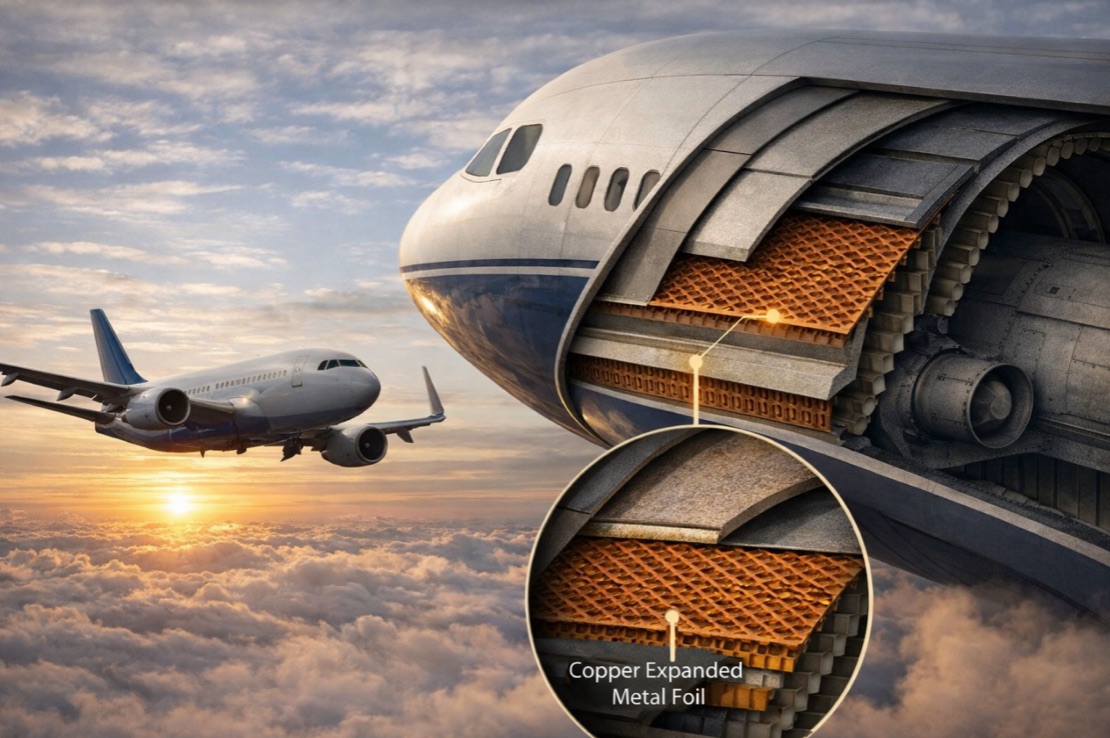
Expanded metal foil provides a conductive pathway that distributes electrical energy safely across the surface, protecting the underlying composite structure.
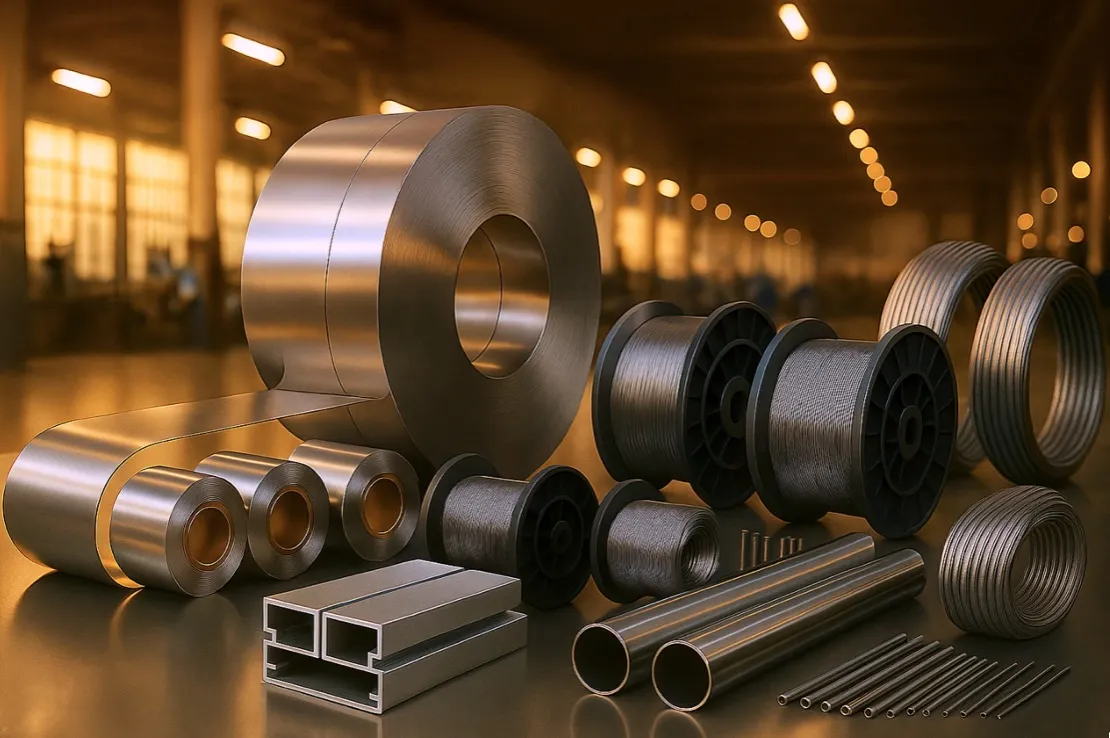
To meet industry requirements, material must be supplied in formats suitable for composite lay-up and infusion processes, including established aerospace and turbine blade market formats, ensuring compatibility with existing production specifications.
How Expanded Metal Foil Protects Composite Structures
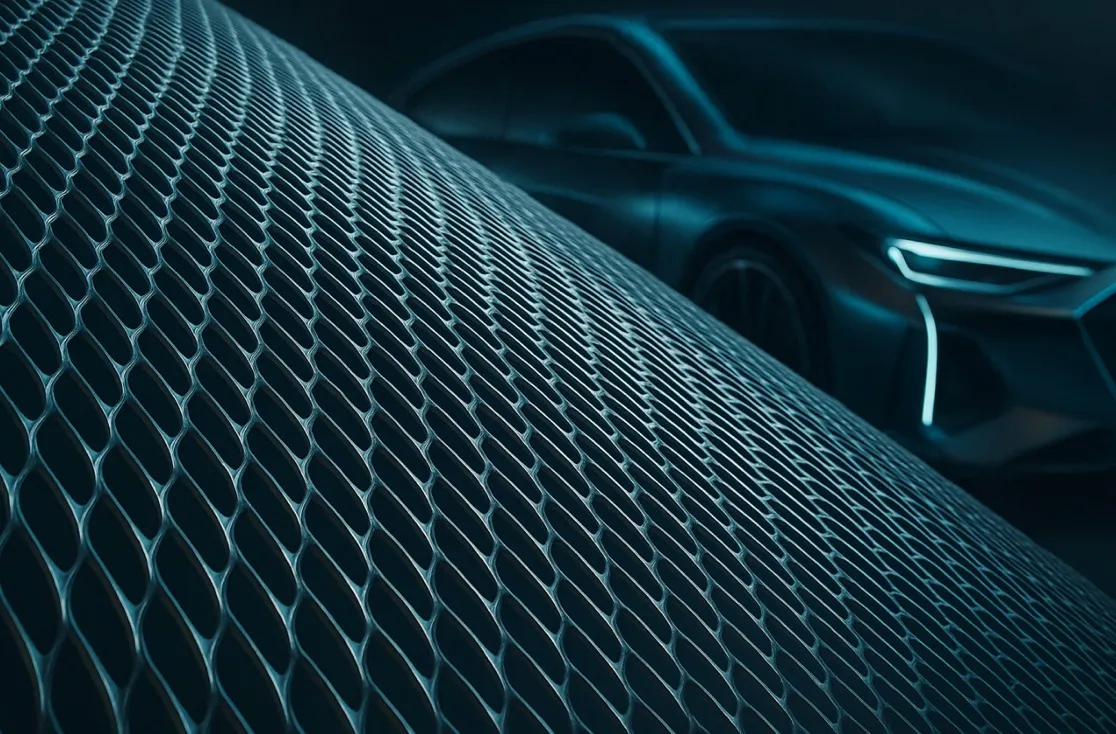
Expanded metal foil is produced by precision slitting and stretching thin metal sheet into a mesh structure. Unlike woven meshes, this process creates a continuous pattern without welds or joins, maintaining strength while keeping weight low.
When embedded within composite laminates, it:
Disperses lightning current over a wider area
Reduces concentrated thermal damage
Maintains aerodynamic smoothness
Adds minimal weight to the final structure
This makes it ideal for applications where performance and protection must coexist.
Applications in Aerospace and Renewable Energy
Expanded metal foil is widely used in:
Aircraft fuselage panels and wing skins
Engine nacelles and composite fairings
Wind turbine blades and nacelle covers
Advanced composite housings exposed to atmospheric discharge
As composite materials continue to replace traditional aluminium structures, integrated lightning strike protection is no longer optional, it is fundamental to safe operation.
A Strong Transatlantic Supply Partnership
Our collaboration with C-Thru Metals enables us to provide expanded metal foil produced to consistent strand geometry, thickness, and open area specifications. Combined with Avocet’s local technical support and distribution capabilities, customers benefit from:
Access to specialist expanded metal manufacturing expertise
Reliable supply into the UK and European markets
Material formats tailored to aerospace and turbine blade production
Support for both development programmes and production volumes
Smaller minimum order quantities with quick lead times, supporting prototype builds and low-volume production runs
This flexibility has proven particularly valuable for customers who require rapid turnaround without committing to large production quantities.
Supporting Your Next Composite Programme
Whether you’re designing next-generation aircraft structures or manufacturing wind turbine blades for large-scale renewable projects, selecting the right lightning strike protection material is essential.
If you are specifying expanded metal foil for composite applications, our team can support you with material selection, technical information, and dependable supply.
Visit the Avocet Steel Strip Ltd website for more information on Expanded Metal Foil for Lightning Strike Protection in Aircraft and Wind Turbines
ENQUIRY FORM
More News