How Much Space Do You Need Between Pallet Racking Units?
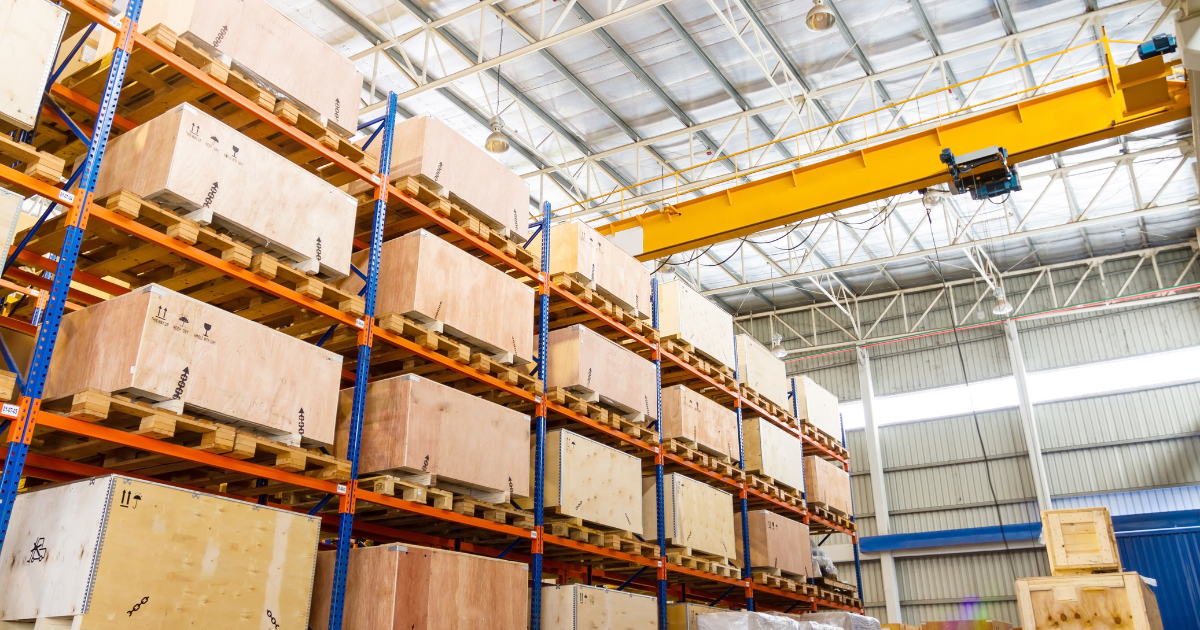
The evolution of warehouses from rudimentary storehouses into efficient fulfilment and inventory management centres has been dictated by the capabilities of forklifts, pallets and the rack shelving needed to store goods in bulk.
Thanks to the development of narrow-aisle forklifts in the 1950s, warehouses could fit more inventory per square metre of space, whilst stronger racking systems ensured that said narrow shelves could be stacked higher than ever before.
This was important in the 1950s in the early era of the modern supply chain but has become even more critical now with so many industries requiring that huge varieties of goods be stored and managed quickly.
However, every warehouse will have a limit for how efficiently they can store inventory before they reach a tipping point where both efficiency and safety are reduced significantly.
This means that there needs to be enough space for safe operation but not too much to waste precious space that could be helping a business to make money.
Here are some of the considerations to make when it comes to space between shelving units.
Forklift Operating Circle
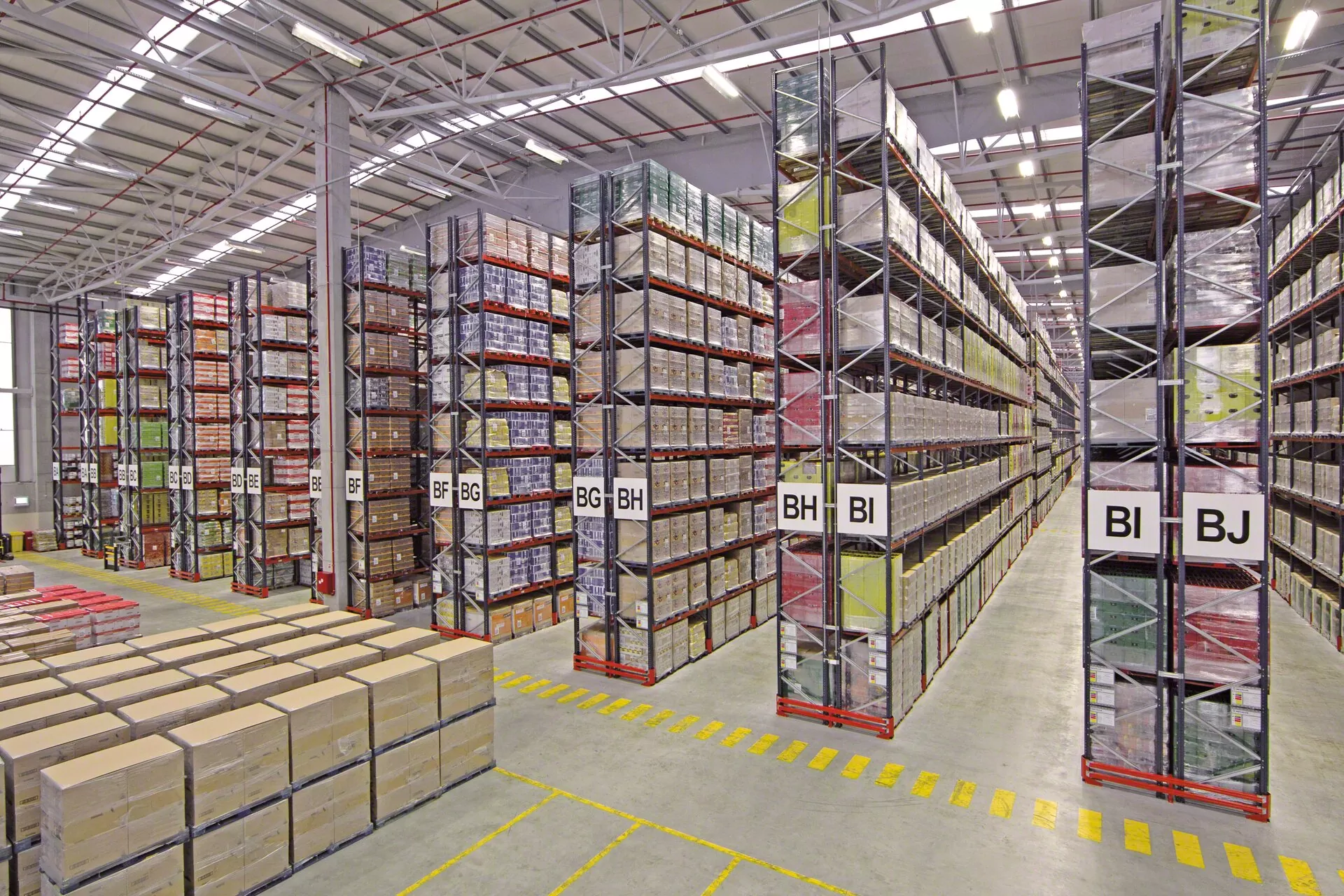
The width of the aisles needs to be big enough not only for forklifts to travel down them but also for them to safely turn, lift and be able to pick up pallets without increasing the risk of accidents.
The exact operating distances will be found in the technical specifications for your fleet, but the important rules to note are that the aisle width must be larger than the operating circle for your largest forklift, and the figures quoted are absolute minimums, with extra space recommended if possible.
A general rule of thumb when it comes to aisle space is to leave between 11 and 15 feet between each rack although this can vary depending on the type of equipment your warehouse uses.
Proximity To Warehouse Walls
Unlike retail shelving, which tends to be placed close to or is affixed to the walls of a shop in order to increase space, racking must be a clear distance from the walls, racking beams and upright end frames.
The main reason for this is to avoid potentially dangerous collapses caused by seismic activity. Warehouses typically rely on a lot of heavy machinery which causes vibrations in the building, which can shake any nearby racking shelves.
These vibrations can also be caused by sudden impacts or by earthquakes.
Because of this, it is advised that racking should be more than two per cent of its height away from the wall in the cross-aisle direction, whilst it should also be more than five per cent away in the down-aisle direction.
Beyond simple safety, having a clear distance from the walls can help make the warehouse easier to clean, make it easier for maintenance teams to have safe access as and when required, and allow for sufficient airflow to avoid damage to products, racking or the building itself.
Whilst there are several general rules and standards that have been employed, ultimately the space between racking units and between the walls of the warehouse will depend considerably on the business and its individual risks and needs.
Visit the UK Shelving Ltd website for more information on How Much Space Do You Need Between Pallet Racking Units?
ENQUIRY FORM